Chinese Chicken Noodle Soup
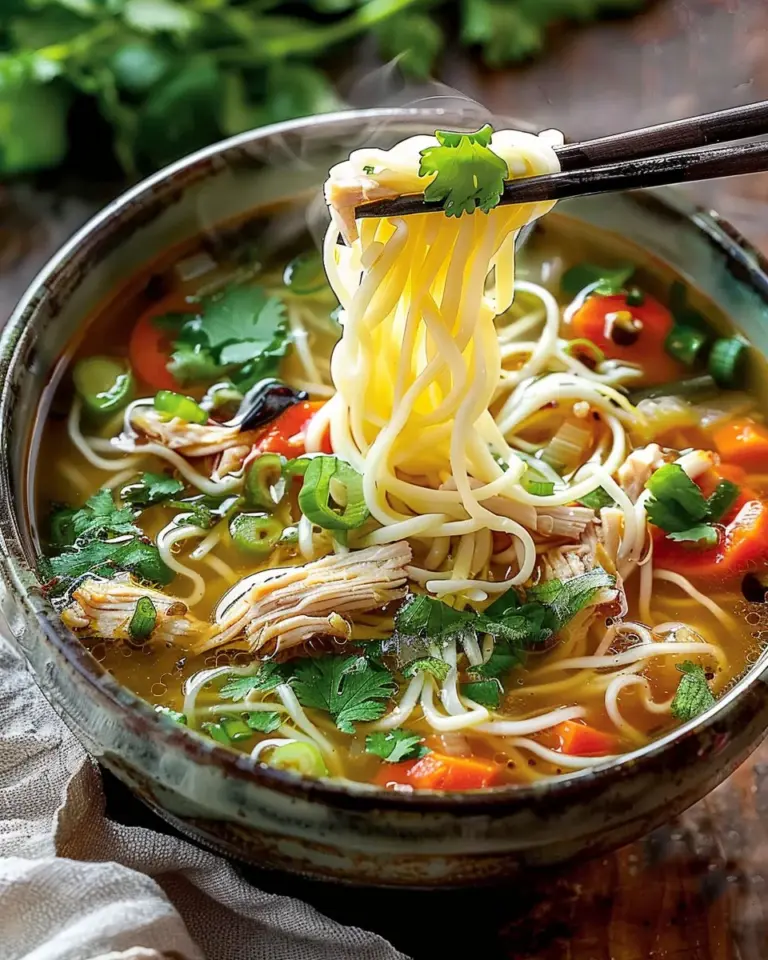
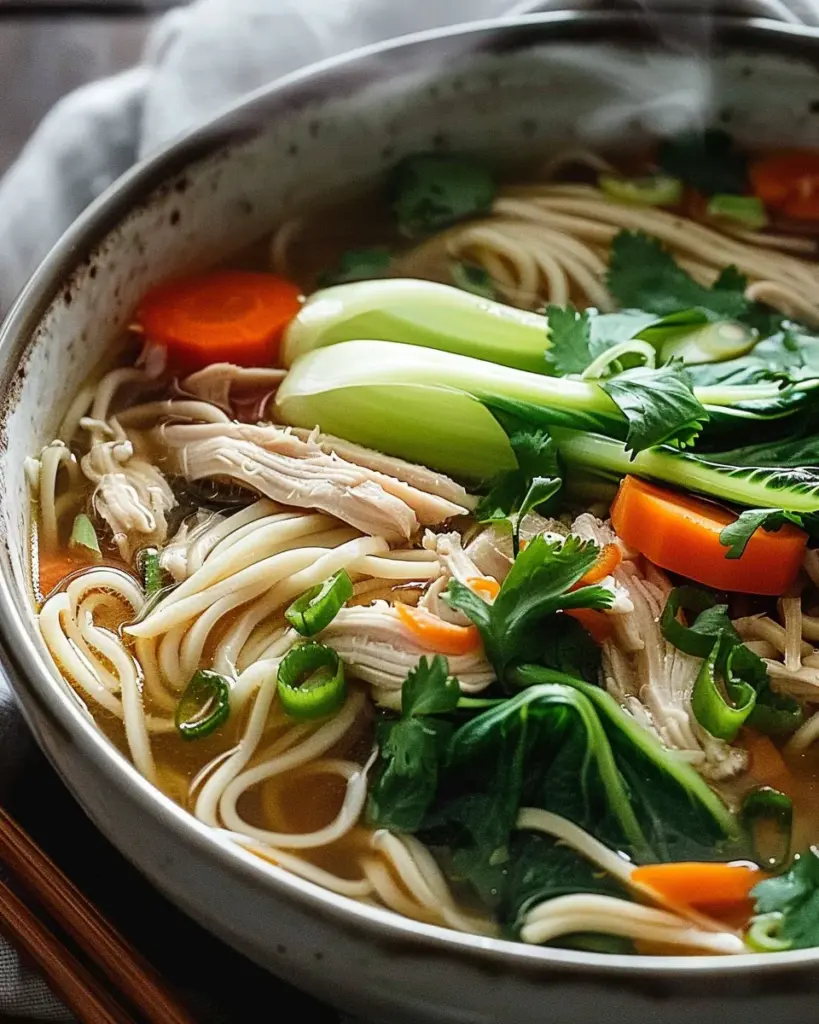
This Chinese Chicken Noodle Soup is a soothing, aromatic bowl of comfort. With tender chicken thighs, fragrant garlic, fresh ginger, green onion and vibrant cilantro, it delivers warmth and depth. It works beautifully on chilly days or when you simply need a nourishing bowl of goodness. Readers will love it because it combines simplicity with layered flavour, comes together in around 25 minutes, and offers both comfort and a light, fresh twist on a classic soup.
Mention the recipe appeal, uses, and any unique features
- The appeal: rich, homemade‑tasting broth, shredded chicken, slurp‑worthy noodles and crisp greens.
- Uses: perfect for a weeknight dinner, a comforting lunch, or even when you’re feeling under the weather.
- Unique features: the use of bone‑in skin‑on chicken thighs for extra broth flavour; aromatic spices like cumin seeds and Sichuan peppercorns; fresh cilantro and bay leaf to lift the broth; a clear but deeply flavoured soup rather than a heavy stew.
Call out why readers will love it
Readers will love this recipe because it:
- makes a restaurant‑quality soup at home with simple ingredients.
- balances comfort and freshness – nourishing but not heavy.
- is versatile – you can customise noodles, greens, or seasoning.
- is approachable in time and effort (prep ~5 min, cook ~20 min).
Preparation Phase & Tools to Use
Essential Tools and Equipment
- A medium‑sized pot or Dutch oven (approx. 3.5‑quart) for the broth and chicken.
- A separate pot for cooking the noodles.
- Tongs to remove the chicken.
- Two forks for shredding the chicken.
- A mesh strainer or colander to remove solids from the broth.
- A chopping board and sharp knife (for garlic, ginger, green onion, carrot, bok choy).
- Measuring spoons and cups (for spices, liquids).
- Serving bowls.
Importance of Each Tool
- The Dutch oven (or similar pot) ensures even heat and good depth for the broth and chicken to simmer properly.
- The separate noodle pot prevents over‑cooking noodles in the soup broth and retains texture.
- Tongs and forks allow you to handle and shred the chicken safely and efficiently.
- The mesh strainer ensures a clear, clean broth by removing solids.
- The chopping board and knife are essential for clean, precise prep of aromatics and vegetables.
- Measuring tools keep seasoning balanced.
- Serving bowls present the dish nicely and preserve the hot temperature of soup.
Preparation Tips
- Pat the chicken thighs dry before searing for a better initial browning.
- Smash garlic cloves (instead of finely mincing) to impart garlic flavour while making it easy to remove later for a clearer broth.
- Slice the ginger into about ¼‑inch thick slices so it infuses flavour well but can be removed easily.
- Keep the green onion halved (white and green parts) for flavour and garnish.
- When cooking the noodles, follow package directions and don’t overcook — you want them with texture, not mushy.
- If you prefer a quicker version, you can mince the aromatics and skip the straining step (see notes).
Ingredients
Broth (Footnote 1)
- 1 teaspoon olive oil (or chicken fat)
- 2 pieces bone‑in, skin‑on chicken thighs (or boneless skinless as alternative) (footnote 2)
- 4 cloves garlic, smashed
- 1″ piece of ginger, sliced
- 1 green onion, halved
- ½ teaspoon cumin seeds
- ½ teaspoon Sichuan peppercorns (or black pepper)
- 1 teaspoon Shaoxing wine (or dry sherry)
- 4 cups chicken broth (or low‑sodium chicken broth)
- ½ bunch cilantro (including leaves and stems — about 1 cup packed)
- 1 bay leaf
Soup
- ½ teaspoon soy sauce (or to taste)
- 3 oz dried noodles (Footnote 3)
- 1 carrot, sliced
- 3 baby bok choy, cut lengthwise into 6 pieces
- 2 tablespoons fresh cilantro, chopped
Step‑by‑Step Directions
- Heat the oil in your 3.5‑qt pot or Dutch oven over medium heat until hot. Add the chicken thighs skin‑side down. Cook undisturbed for about 1 minute or until the bottom side turns light golden.
- Flip the chicken thighs. Add the smashed garlic, sliced ginger, halved green onion, cumin seeds and Sichuan peppercorns. Cook for about 1 minute, stirring occasionally, until the spices release fragrance.
- Pour in the Shaoxing wine, then add the chicken broth, packed cilantro (leaves + stems) and bay leaf. Bring the mixture to a boil over medium‑high heat, then reduce to a simmer and cover. Cook for 20 minutes.
- Meanwhile, cook the noodles in a separate pot according to the package directions. Drain when done and set aside.
- After 20 minutes, remove the chicken thighs with tongs and transfer them to a plate. Use two forks to remove and discard the skin. Then shred the chicken meat using the forks.
- Use a mesh colander or strainer to remove the solids from the broth (garlic, ginger, onion, bay leaf, cilantro stems) and discard them — you’re left with a clear, aromatic broth.
- Return the broth to medium‑high heat, add the soy sauce, and taste. Adjust seasoning if needed (salt, pepper). Bring it back to a boil.
- Add the sliced carrot. Cook for about 3 minutes. Then add the bok choy and cook for about 1 minute, or until the bok choy reaches your desired texture. Stir in the shredded chicken so it warms up again.
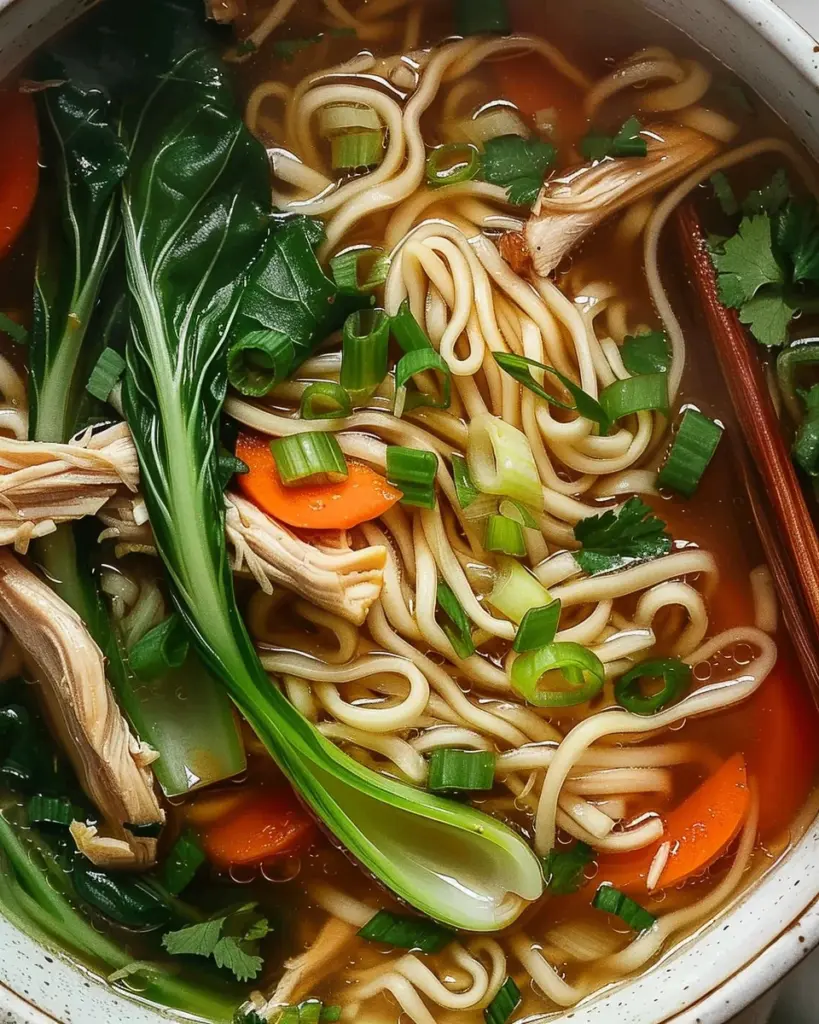
- Divide the cooked noodles among serving bowls. Ladle in the hot broth with vegetables and shredded chicken. Garnish each bowl with a sprig of fresh cilantro. Serve hot and enjoy immediately.
Include Tips or Variations
- Variation (quicker version): Mince the garlic, ginger, green onion and cilantro (instead of full pieces). Use powdered spices instead of whole cumin seeds and peppercorns. Skip the straining step (so the aromatics stay in the broth).
- Alternative protein: If you prefer leaner or faster protein, use boneless skinless chicken thighs (or breasts). For a super‑easy version, use about 2 cups of shredded rotisserie chicken added at the end (skip thighs).
- Noodle swap: Instead of dried noodles, you may use fresh noodles (about 4 oz / 225 g) since they expand less than dried.
- Vegetable swap: If bok choy isn’t available, you could use Chinese broccoli (gai lan), spinach or baby choy.
- Heat boost: For extra spice, serve with a drizzle of chili oil or add a pinch of red pepper flakes.
Serving Suggestions
This Chinese Chicken Noodle Soup is best served hot, immediately after it’s cooked, to enjoy the full depth of the broth and the vibrant textures of the vegetables and noodles. Here’s how to elevate the experience:
- Serve in deep bowls to retain heat longer and keep the broth piping hot.
- Garnish with fresh herbs like cilantro or sliced green onion just before serving to brighten the flavors.
- Add a touch of chili oil or sesame oil for extra depth and aroma.
- Serve with a spoon and chopsticks for a traditional noodle soup experience.
- Pair with a small dish of pickled vegetables to contrast the warm, savory broth.
You can enjoy this soup as a light main course or combine it with complementary sides for a full Chinese‑inspired meal.
Common Mistakes to Avoid & How to Perfect the Recipe
1. Overcooking the Noodles
Mistake: Adding noodles directly to the broth and letting them cook too long.
Fix: Cook noodles separately according to package directions. Add just before serving to preserve texture.
2. Using Low‑Quality Stock
Mistake: Using water or bland broth as the soup base.
Fix: Always use high‑quality chicken broth or homemade stock. Bone‑in chicken thighs enhance richness.
3. Skipping Aromatics
Mistake: Omitting garlic, ginger, or green onion.
Fix: These aromatics are essential for the soup’s flavor profile. Even if you’re short on time, at least smash them and toss them in.
4. Underseasoning
Mistake: Not tasting and adjusting salt, soy sauce, or Shaoxing wine.
Fix: Always taste the broth before serving and adjust seasoning as needed.
5. Not Straining the Broth (When Needed)
Mistake: Leaving all aromatics and solids in the soup.
Fix: Straining the broth results in a clear, elegant presentation and a smoother eating experience.
6. Overcooking the Bok Choy
Mistake: Adding bok choy too early.
Fix: Add it during the last minute of cooking to keep it crisp and green.
7. Skipping the Garnish
Mistake: Not using fresh herbs or finishing oils.
Fix: A sprig of cilantro or a dash of chili oil brings the bowl to life with freshness and spice.
8. Using Boneless Skinless Chicken for Broth
Mistake: Using skinless chicken for making broth from scratch.
Fix: For rich broth, always use bone‑in, skin‑on chicken thighs and simmer slowly.
Side Dish Recommendations
To turn your Chinese Chicken Noodle Soup into a complete and satisfying meal, pair it with side dishes that contrast and complement its warm, aromatic profile.
🥢 Side Dishes to Pair With Chinese Chicken Noodle Soup
1. Scallion Pancakes (Cong You Bing)
Crispy, flaky and packed with green onion flavor — a perfect contrast to the lightness of the soup.
2. Chinese Cucumber Salad
Refreshing and crunchy, this vinegar‑based salad cuts through the warmth of the broth and refreshes your palate.
3. Steamed Dumplings
Filled with pork, vegetables or chicken, dumplings offer a satisfying, chewy bite alongside the soup.
4. Stir‑Fried Greens (e.g., Chinese broccoli with garlic)
Lightly stir‑fried greens balance the richness of the soup and add nutritional value.
5. Spring Rolls
Crispy, savory and perfect for dipping in sweet chili sauce, they offer a crunchy contrast to the soft noodles.
6. Chinese Tea Eggs
Hard‑boiled eggs steeped in soy sauce and tea. Their umami flavor works beautifully with a broth‑based soup.
7. Pickled Radish or Kimchi
Fermented or pickled sides bring brightness, acidity, and a probiotic boost.
8. Steamed Buns (Baozi)
Soft, fluffy steamed buns with sweet or savory filling give a full meal feel.
Recipe Tips, Storage and Reheating Instructions
Recipe Tips
- Use bone-in chicken for deeper flavor. Simmering skin-on thighs builds a rich, full-bodied broth that boneless cuts can’t match.
- Layer aromatics smartly. Add garlic, ginger, and green onion early to develop complexity without overpowering the soup.
- Cook noodles separately. Always cook noodles in a separate pot to prevent them from soaking up the broth and becoming soggy.
- Strain the broth for elegance. For a clear, restaurant-style presentation, strain out solids before adding fresh veggies and shredded chicken.
- Add veggies at the end. This keeps the bok choy vibrant and crisp, while carrots stay tender but not mushy.
- Garnish fresh. Finish with fresh chopped cilantro or green onions for an extra burst of flavor and color.
Storage Instructions
- Refrigeration: Let the soup cool completely, then store in an airtight container for up to 4 days in the refrigerator.
- Noodles separate: Store noodles and broth separately to avoid soggy texture. Combine when reheating.
- Freezing: The broth (with chicken and veggies but without noodles) can be frozen for up to 2 months. Add freshly cooked noodles after thawing for best results.
Reheating Instructions
- Stovetop: Heat the soup gently over medium heat until it reaches a simmer. Add noodles just before serving.
- Microwave: Reheat individual portions on medium heat in 1-minute intervals, stirring in between.
- Avoid overcooking veggies: Reheating too long can make the bok choy too soft. Add fresh bok choy if needed for texture.
Frequently Asked Questions (FAQs)
What type of noodles are best for Chinese Chicken Noodle Soup?
Dried wheat noodles or egg noodles are ideal, but fresh noodles can also be used. Avoid overly thick or starchy noodles that overpower the delicate broth.
Can I use rotisserie chicken instead of cooking thighs?
Yes, use 2 cups of shredded rotisserie chicken and add it at the end. You can skip the step of simmering chicken thighs, which saves time.
Is this soup spicy?
No, the original recipe is not spicy. However, you can add chili oil or red pepper flakes for heat.
How can I make it vegetarian?
Swap chicken broth for vegetable stock and use tofu or mushrooms instead of chicken. Skip Shaoxing wine or use a splash of vinegar for acidity.
What vegetables can I substitute for bok choy?
Try spinach, napa cabbage, Chinese broccoli (gai lan), or kale. Cook times may vary slightly.
Can I prepare this in advance?
Yes. Make the broth and shred the chicken ahead of time. Store separately from noodles and veggies. Combine and heat just before serving.
What does Shaoxing wine do in the recipe?
It adds a deep umami note and enhances the broth’s savory flavor. If unavailable, use dry sherry as a substitute.
Can I skip straining the broth?
Yes, but it results in a more rustic, less clear soup. Straining enhan