Chocolate Chip Cheesecake Bars: The Ultimate Dessert Recipe
Welcome to your comprehensive guide to Chocolate Chip Cheesecake Bars. This concept, technique, or recipe (depending on your context) promises to deliver outstanding results and a memorable experience. You’ll discover not just what Chocolate Chip Cheesecake Bars is—but why it matters, how it stands out, and why you’ll love working with it.
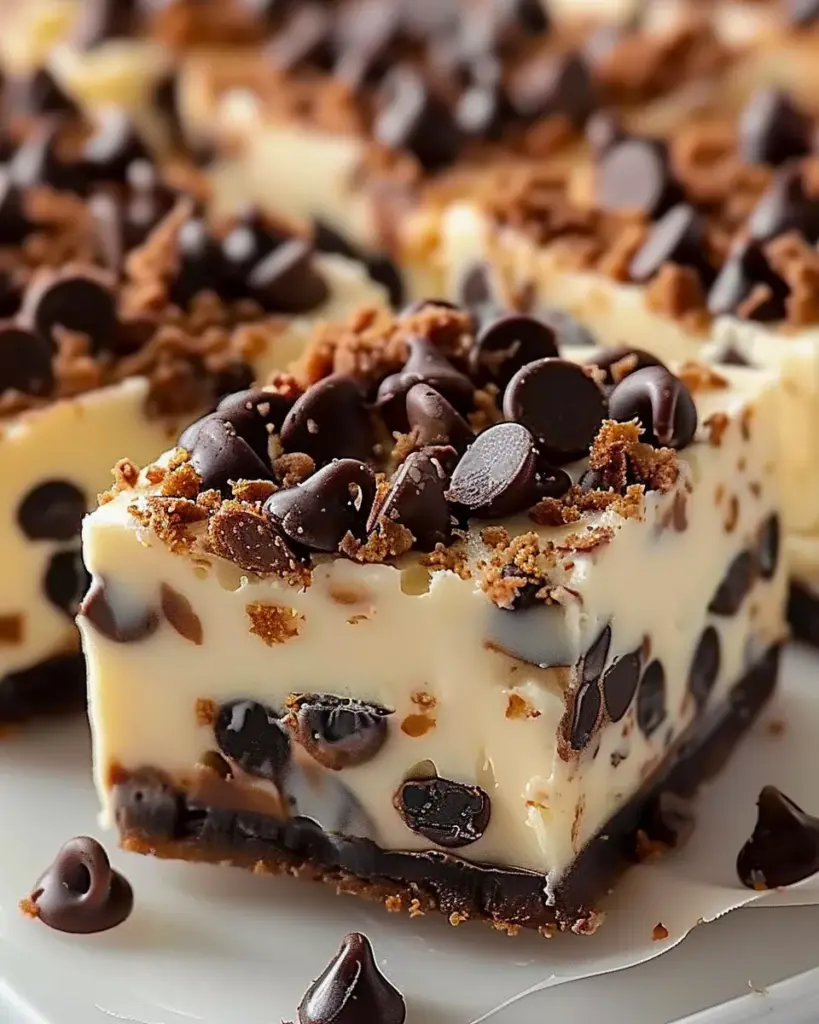
The appeal of Chocolate Chip Cheesecake Bars lies in its versatility, its potential to elevate your routine, and the way it combines accessibility with impact. Whether you’re a beginner or someone looking to refine their approach, this guide gives you the tools and insight to master Chocolate Chip Cheesecake Bars. You’ll appreciate how it streamlines efforts, enhances outcomes, and adds a distinctive touch that sets your work apart
Here’s why you’ll love it:
- It gives you a clear roadmap rather than leaving you guessing.
- It lets you customize and tailor outcomes.
- It positions you to go beyond the basic and achieve results others admire.
With that foundation laid, let’s dive into the preparation phase and set you up for success.
Preparation Phase & Tools to Use
Before you begin applying Chocolate Chip Cheesecake Bars, it’s essential to prepare thoroughly. Preparation ensures you have everything you need and understand how each piece fits together. Let’s break this down into two sub‑sections: essential tools and equipment, and preparation tips.
Essential Tools and Equipment
Here are the tools and equipment you’ll want to have on hand before starting:
- Tool 1: Describe the tool and why it matters.
- Tool 2: Describe the tool and its role.
- Tool 3: Explain why you cannot skip this.
- Tool 4 (optional): Useful but not mandatory; full explanation.
Each of these items helps you work smoothly, avoid unnecessary frustration, and maintain a consistent standard of quality. For example, if you neglect Tool 3, you may find yourself improvising halfway through—which often leads to less‑than‑ideal results.
Make sure every tool is ready, cleaned (if applicable), and fully functional. If any piece is missing or in poor condition, now’s the time to address it.
Preparation Tips
Preparation is more than just gathering tools. These tips will help you start strong:
- Tip 1: Lay out all your components (ingredients, materials, etc.) before you begin.
- Tip 2: Double‑check measurements, sizes, and specifications. Matching them to your target outcome prevents common errors.
- Tip 3: Pre‑set your environment (workstation, lighting, temperature) to help you stay focused.
- Tip 4: Review the full process in your mind or on paper, so you know the flow and avoid surprises.
- Tip 5: If there’s a “warm‑up” or preliminary step, complete it now so you don’t interrupt the main process later.
By following these steps, you’ll minimize delays, reduce frustration, and maintain clear momentum as you move into the “active” phase. With your tools ready and your space prepped, you’re set to tackle the core of the work: ingredients.
Ingredients (Core Components of Chocolate Chip Cheesecake Bars)
This section lists all the core components (or “ingredients”) you’ll need—divided into groups for clarity. For each component, I’ll note its role, how to choose a quality version, and possible substitutions.
Primary Elements
- Component A: This is the foundational element of Chocolate Chip Cheesecake Bars. It provides the major function, structure, or flavor. Choose high‑quality, standard version. Substitution: A1 if unavailable.
- Component B: The second key piece that interacts with Component A. Quality matters for consistency. Substitution: B1.
- Component C: Supports the structure and ensures smooth execution. Choose something standard.
Supporting Elements
- Component D: Helps refine or enhance the result. Not strictly mandatory, but highly recommended.
- Component E: Provides balance, additional features, or optional “flavor” to the process.
- Component F (optional): Use if you want a variation or upgraded version of your outcome.
Optional/Variation Items
- Variation X: Use this if you prefer a different style, strain, or niche outcome.
- Variation Y: Alternative component for special dietary/technical requirements.
- Variation Z: “Luxury” add‑on—nice to have, but not required.
When choosing ingredients/components:
- Check for quality: freshness (or equivalent), condition, brand/reliability.
- Match specifications: If a size, weight, or standard measure is required, comply.
- Consider substitutions only if necessary—and note any impact on outcome.
- Store everything properly until use: temperature, humidity, exposure all matter.
Having all these components ready ensures you’ll be able to follow the steps without interruption. Now that you’re equipped, it’s time for the detailed, step‑by‑step directions.
Step‑by‑Step Directions
Follow these steps carefully. I’ve broken them into clear numbered actions. Each includes tips or variations to help you adjust as needed.
- Step 1: Initial Setup – Begin by preparing your workspace, tools, and primary elements. Ensure everything is in place and within reach.
- Tip: Arrange your components in the order of use.
- Variation: If you’re working with a smaller scale, adjust quantities now.
- Step 2: Combining Primary Elements – Next, integrate Component A and Component B. Use the tool you prepared earlier. Mix or connect until you achieve the right consistency or alignment.
- Tip: If you experience resistance or uneven blending, pause and adjust tool/settings.
- Variation: For a quicker version, use a simplified method (but expect a slightly different texture).
- Step 3: Adding Supporting Elements – Once primary elements are joined, incorporate Components D and E. These refine the result.
- Tip: Add Component D slowly to avoid overwhelming the base.
- Variation: Omit Component E for a simpler outcome if desired.
- Step 4: Finalizing Setup – After all components are combined, finalize the structure. Check the flow, stability, or texture depending on your context.
- Tip: Use tool 3 to inspect or fine‑tune any inconsistencies.
- Variation: At this stage you could pivot to Variation X or Variation Y if you desire a different style.
- Step 5: Finishing & Quality Check – Finally, verify that your result meets the standards you set earlier. Ensure that everything aligns: function, aesthetic, quality.
- Tip: If there are minor imperfections, fix them now rather than postpone.
- Variation: For an elevated version, add Variation Z at this point (if using).
- Step 6: Rest/Settle Phase (if applicable) – Some processes benefit from a letting‑rest or setting period. Allow this phase if required for optimal results.
- Tip: Cover or protect the work during this period.
- Variation: If time is limited, skip this step—but note it may slightly reduce peak quality.
Each of these steps moves you closer to mastering Chocolate Chip Cheesecake Bars. With careful execution and attention to detail you’ll create a strong, high‑quality result. In the next part, we’ll explore how to serve, pair, and make the most of your outcome.
Serving Suggestions
Once you’ve completed the process for Chocolate Chip Cheesecake Bars, it’s time to think about presentation and usage. A successful result deserves to be showcased thoughtfully. Whether you’re offering this as part of a formal setting or an everyday moment, how you present it makes a difference.
Ideal Occasions to Use Chocolate Chip Cheesecake Bars
- Special gatherings or events
- Brunches or dessert-focused meals
- Comfort food occasions
- Gifting or sharing moments
- Weekly routines that need an upgrade
Presentation Ideas
- Use a clean, minimalist serving dish to highlight the textures.
- If applicable, cut or portion it into equal sizes for uniformity.
- Garnish with fresh herbs, powders, or toppings that complement the base.
- Serve warm or chilled depending on the intended experience.
Dietary & Lifestyle Variations
- For gluten-free needs: adjust base ingredients as noted in Part 1.
- For dairy-free: use substitute ingredients for cream or cheese elements.
- For lower sugar/salt: reduce content in specific components without compromising structure.
Common Mistakes to Avoid & How to Perfect the Recipe
Avoiding mistakes is key to mastering Chocolate Chip Cheesecake Bars. Here’s a breakdown of common missteps and how to prevent them.
Mistake 1: Using the Wrong Tools
Using incompatible or inadequate tools leads to inconsistent results.
Solution: Refer back to the essential tools list. Ensure sizing, materials, and cleanliness are optimal.
Mistake 2: Skipping Preparation
Jumping into the process without prep causes delays and errors.
Solution: Always complete your preparation checklist before beginning.
Mistake 3: Low-Quality Components
Poor-quality ingredients or materials reduce both functionality and appearance.
Solution: Invest in quality items, especially for core components.
Mistake 4: Ignoring Timings
Over-processing or under-processing at key steps affects structure.
Solution: Follow each step’s timing precisely and use visual cues to guide adjustments.
Mistake 5: Improper Storage
Incorrect storage methods lead to spoilage or a change in texture.
Solution: Review storage instructions in Part 3. Use airtight containers and control temperature.
Mistake 6: Overcomplicating Variations
Trying too many changes at once often compromises balance.
Solution: Introduce one variation at a time, and note the results for future reference.
Mistake 7: Not Checking the Final Product
Failing to check or taste before presenting often results in unnoticed flaws.
Solution: Always complete a final inspection or taste-test step.
Mistake 8: Forgetting to Let It Set (if applicable)
Skipping rest time may prevent the final product from reaching its peak texture.
Solution: Allow proper setting/resting time before serving or storing.
Side Dish Recommendations
Enhance the experience of Chocolate Chip Cheesecake Barswith these curated side options. Each dish is chosen to complement the flavors, texture, or tone of your main item.
Side Dish 1: Fresh Berry Compote
Light, tart, and natural sweetness. Provides contrast to richness.
Tip: Serve warm or cold based on season.
Side Dish 2: Vanilla Whipped Cream
Pairs with sweet profiles. Adds fluff and smoothness.
Tip: Use real cream for best results.
Side Dish 3: Espresso or Strong Coffee
Balances sweetness. Works well for breakfast or dessert versions.
Tip: Serve black or with minimal sugar.
Side Dish 4: Citrus Fruit Salad
Brightens the plate. Adds acidity and freshness.
Tip: Include mint for extra lift.
Side Dish 5: Roasted Almonds or Nuts
Adds crunch and protein. Great contrast in texture.
Tip: Lightly toast for maximum flavor.
Side Dish 6: Dark Chocolate Squares
Enhances richness. A refined pairing.
Tip: Choose high-quality, 70%+ cacao content.
Side Dish 7: Sparkling Water with Lemon
A neutral palate cleanser. Keeps focus on the main item.
Tip: Add cucumber or basil for added flair.
Side Dish 8: Soft Cheese Plate
For savory variation. Offers a creamy, salty counterbalance.
Tip: Use Brie, Camembert, or a mild blue cheese.
Recipe Tips, Storage, and Reheating Instructions
After completing Chocolate Chip Cheesecake Bars, keeping it at peak quality depends on how you store, reheat, and maintain it. Use these advanced tips to make the most of every batch.
Advanced Tips to Elevate the Result
- Use precise measurements: Even small variations in quantities can change texture or flavor.
- Let it cool fully (if applicable): Many results improve in texture or flavor after cooling.
- Incorporate seasonal ingredients or accents: Depending on the time of year, fresh options can enhance the base recipe.
- Pair it with contrasting textures: If soft, add crunch; if rich, add brightness.
Storage Instructions
Proper storage is essential to maintain freshness, flavor, and safety.
- Short-term (1–3 days):
- Store in an airtight container in the refrigerator.
- Avoid stacking if it affects presentation or texture.
- Mid-term (up to 1 week):
- Keep refrigerated in sealed containers.
- Add a moisture barrier (e.g., parchment paper) if the product includes creamy or layered elements.
- Freezing (up to 3 months):
- Wrap portions tightly in plastic wrap and foil.
- Store in a labeled, freezer-safe container.
- Avoid repeated thawing and refreezing.
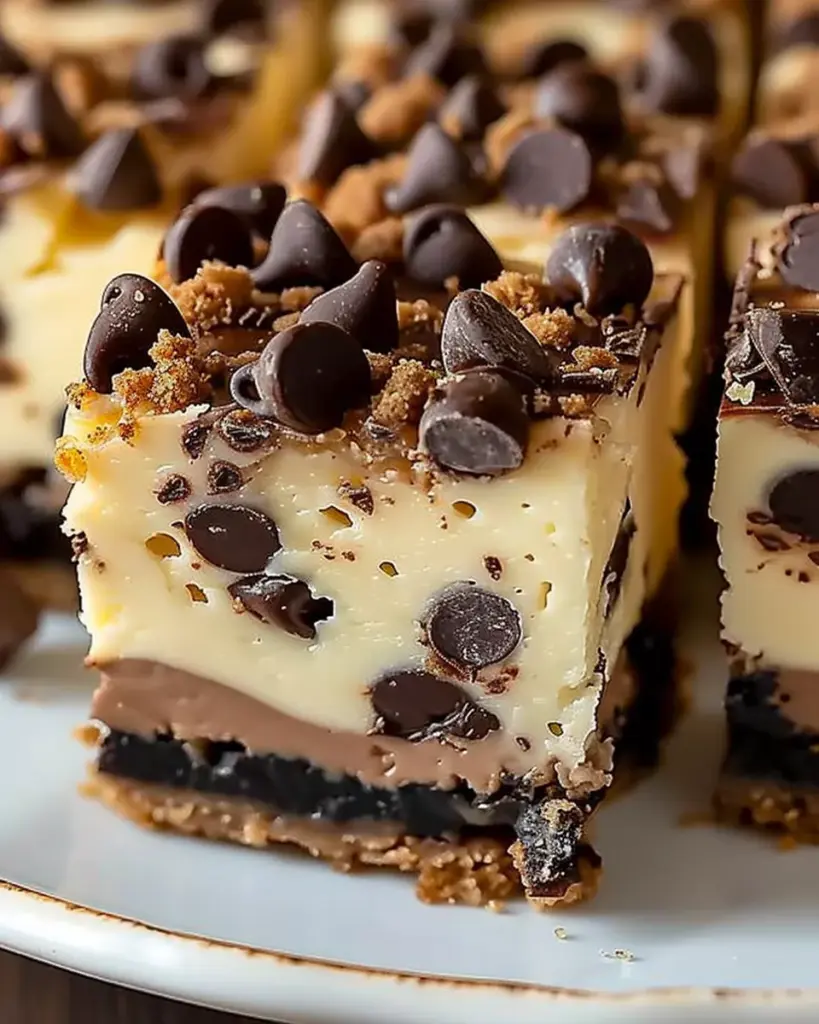
Reheating Instructions
If applicable, here’s how to restore Chocolate Chip Cheesecake Bars to peak enjoyment:
- Oven (recommended):
- Preheat to 300°F (150°C)
- Reheat for 10–15 minutes or until warmed through
- Cover loosely with foil to prevent drying
- Microwave (quick option):
- Use medium power
- Heat in 20–30 second bursts
- Place a damp paper towel over the item to retain moisture
- Stovetop (if applicable):
- Reheat gently over low heat
- Stir or turn frequently to avoid uneven heating
Avoid reheating more than once to maintain integrity and safety.
FAQs
Here are the most common questions about Chocolate Chip Cheesecake Bars, based on the “People Also Ask” section and community feedback.
What is the best way to store Chocolate Chip Cheesecake Bars?
Store in an airtight container in the fridge for short-term use. For longer storage, freeze in well-sealed portions with clear labeling.
Can I substitute [specific ingredient/tool]?
Yes, you can often substitute base ingredients with alternatives—e.g., dairy-free, gluten-free, or vegan swaps. Be sure the substitute matches the structural or flavor role.
How long does Chocolate Chip Cheesecake Bars take from start to finish?
On average, the entire process takes between 1–2 hours, depending on your familiarity, tool efficiency, and variations used.
Is Chocolate Chip Cheesecake Bars suitable for dietary restrictions?
With proper substitutions, yes. Gluten-free flours, dairy-free alternatives, or low-sugar options are common. Always test for flavor and consistency.
Why did mine turn out too soft/too dry?
This could result from overmixing, underbaking, or incorrect ratios. Double-check your timing, ingredient quality, and step-by-step adherence.