One-Pot Philly Cheesesteak Soup
Philadelphia’s most iconic sandwich—the Philly cheesesteak—gets a warm, spoon-ready makeover in this rich and hearty Philly Cheese Steak Soup. Imagine tender strips of steak, melted provolone cheese, sautéed onions and bell peppers, all bathed in a creamy, savory broth. It’s comfort food at its finest, perfect for brisk evenings or lazy weekends.
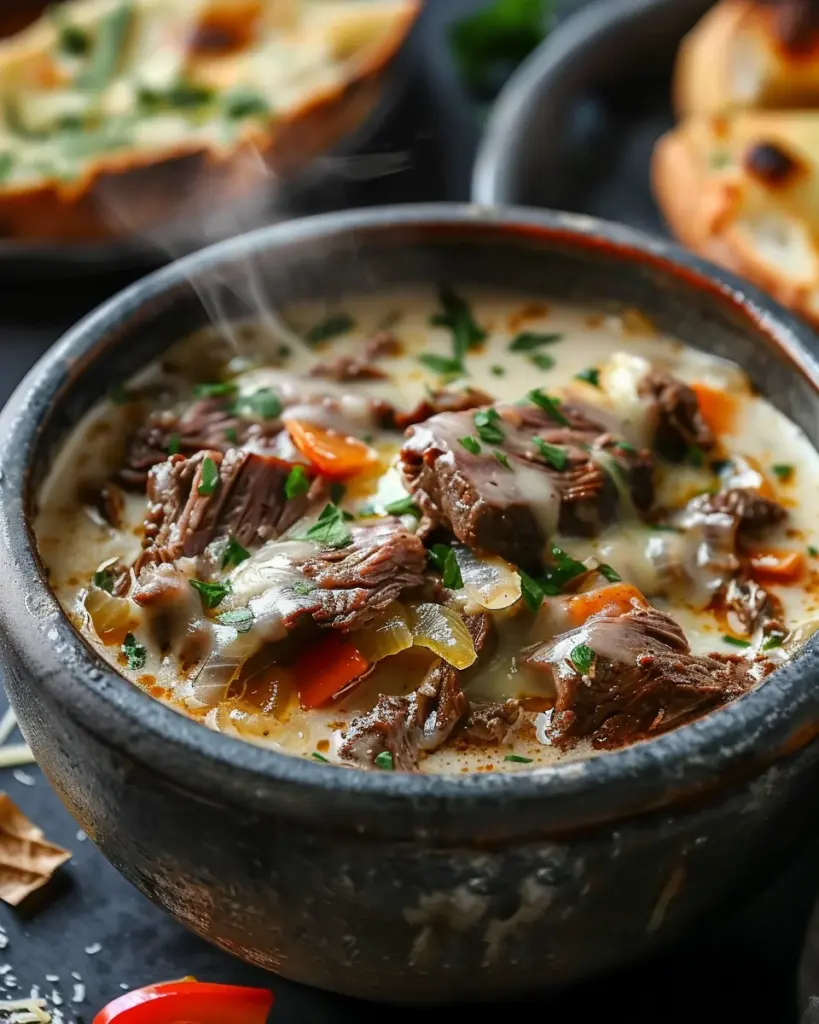
This soup is more than just a creative twist on a classic; it’s a satisfying and nostalgic experience that brings the flavor of Philly to your dinner table. Whether you’re a long-time fan of the cheesesteak or just discovering its charm, this soup is bound to become a household favorite.
You’ll love this recipe because:
- It’s hearty, cheesy, and packed with flavor.
- It’s ideal for family dinners, game nights, or cozy gatherings.
- It’s flexible with ingredients and easy to adjust for dietary preferences.
- It transforms a beloved sandwich into a warm, comforting meal.
Let’s explore how to prepare this soul-soothing dish, the essential tools you’ll need, and tips to get it just right.
Preparation Phase & Tools to Use
Transforming a sandwich into a soup requires specific kitchen tools and a bit of planning. Here’s how to set yourself up for success.
Essential Tools and Equipment
- Heavy-bottomed soup pot or Dutch oven
Crucial for even heating and preventing scorching, especially with cream-based soups. - Sharp chef’s knife
Needed to thinly slice ribeye steak and finely dice vegetables. - Cutting board
Use separate boards for meat and vegetables to maintain food safety. - Measuring cups and spoons
Ensure accuracy for liquids like broth and cream. - Grater
Freshly grated cheese melts better than pre-shredded versions. - Wooden spoon or silicone spatula
Gentle on your cookware and great for stirring soup without damaging the pot. - Soup ladle
Makes serving clean and easy. - Serving bowls
Deep bowls retain heat and allow for hearty portions.
Optional Equipment:
- Immersion blender (for smoother texture)
- Slow cooker or Instant Pot (for alternate cooking methods)
Importance of Each Tool
Each item in your toolkit serves a purpose. The heavy-bottomed pot ensures consistent cooking. A good knife is essential for achieving thin, tender slices of steak. Using fresh cheese and grating it yourself ensures better melting and flavor integration.
Preparation Tips
- Slice steak thin and across the grain to ensure tenderness.
- Pre-measure your ingredients for smoother cooking flow.
- Dice vegetables uniformly so they cook evenly.
- Grate cheese in advance for quicker melt-in during the final step.
- Warm the beef broth slightly before adding to avoid temperature shock when deglazing.
Ingredients for Philly Cheese Steak Soup
Here’s what you’ll need to recreate the Philly magic in soup form:
- 1 tablespoon olive oil
- 1 pound thinly sliced ribeye steak
- 1 large onion, diced
- 1 green bell pepper, diced
- 2 cloves garlic, minced
- 4 cups beef broth
- 2 cups heavy cream
- 8 ounces provolone cheese, shredded
- Salt and pepper to taste
- Crusty bread for serving
Optional ingredients:
- Red pepper flakes or hot sauce for heat
- Cornstarch slurry (1 tablespoon cornstarch mixed with 2 tablespoons cold water) for thickening
- Substitutions: Use sirloin or flank steak in place of ribeye; replace heavy cream with half-and-half for a lighter version.
Step-by-Step Directions
Follow these steps to prepare your Philly Cheese Steak Soup:
- Heat olive oil in a large pot over medium-high heat.
- Sear the steak: Add the thinly sliced ribeye and cook until browned. Remove and set aside.
- Tip: Cook in batches to avoid overcrowding and ensure even browning.
- Sauté vegetables: In the same pot, add diced onion and bell pepper. Cook until softened, about 5-7 minutes.
- Add garlic: Stir in minced garlic and cook for 1 minute until fragrant.
- Deglaze: Pour in the beef broth, scraping up browned bits from the pot’s bottom.
- Return steak to pot and bring mixture to a simmer.
- Add cream: Lower the heat and stir in heavy cream slowly.
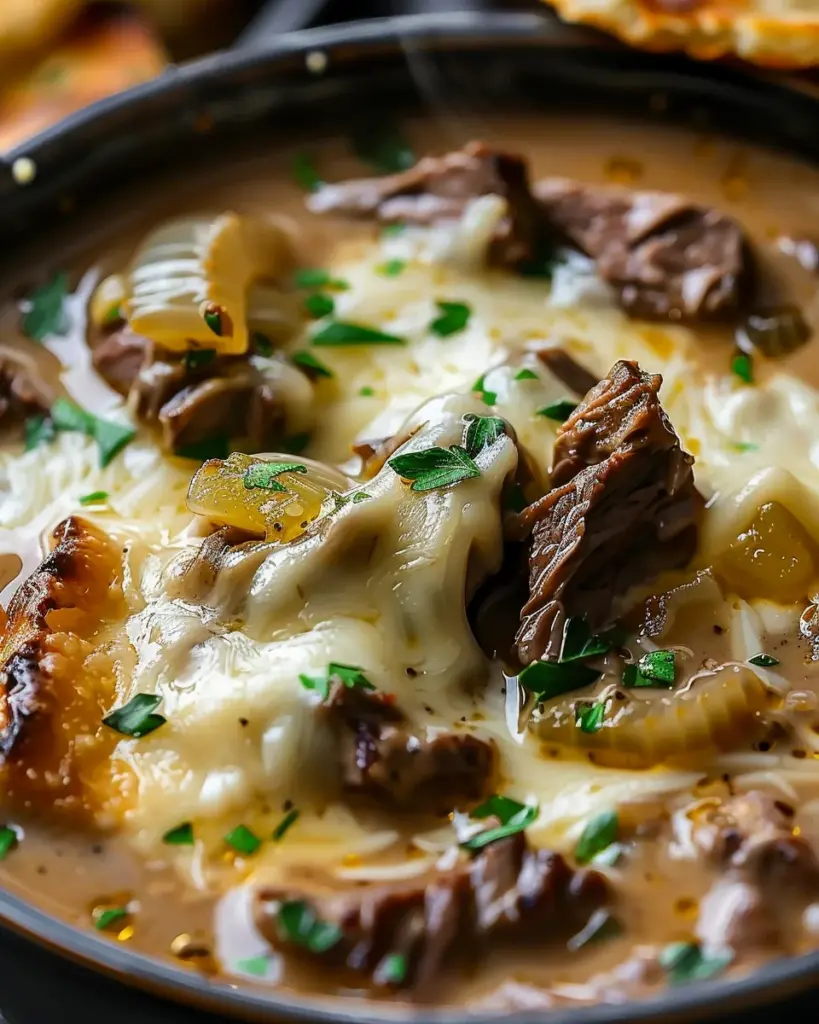
- Melt cheese: Add shredded provolone, stirring continuously until melted and fully incorporated.
- Season with salt and pepper to taste.
- Serve hot with crusty bread on the side for dipping.
Optional Variations:
- For a spicier soup, stir in red pepper flakes or a few dashes of hot sauce with the broth.
- To thicken the soup, stir in the cornstarch slurry during simmering and cook until desired consistency is reached.
- To make it gluten-free, ensure your broth is certified gluten-free and serve with gluten-free bread.
This soup brings the beloved essence of a Philly cheesesteak into every spoonful. Up next: how to serve it, what to pair it with, and how to avoid common mistakes.
Serving Suggestions
Serving Philly Cheese Steak Soup is all about maximizing its rich, comforting appeal while balancing it with texture and freshness. Here’s how to make your presentation and pairings elevate the entire experience.
- Ladle the soup into deep, heat-retaining bowls for a satisfying portion.
- Garnish with fresh herbs, such as chopped parsley or chives, to add color and a hint of freshness.
- Serve immediately while the cheese is still melted and stretchy—this is the heart of the experience.
- Add crusty bread on the side for dipping. Toasted sourdough, baguette slices, or garlic bread work perfectly.
Beverage Pairing Tips
- Red Wine: A bold Cabernet Sauvignon or smooth Merlot cuts through the creaminess.
- Beer: A crisp lager or pale ale balances the richness.
- Non-Alcoholic: Sparkling water with lemon or unsweetened iced tea refreshes the palate.
This soup also makes a great centerpiece for casual gatherings or comfort-food-themed dinner nights.
Common Mistakes To Avoid & How to Perfect the Recipe
Avoiding a few common pitfalls will help ensure your Philly Cheese Steak Soup turns out perfectly every time.
Mistake #1: Overcooking the Steak
Why it’s a problem: Steak becomes chewy and dry.
How to fix it: Cook over high heat briefly and slice it thinly against the grain.
Mistake #2: Using Pre-Shredded Cheese
Why it’s a problem: It contains anti-caking agents that affect melting.
How to fix it: Always shred provolone fresh for a smooth, creamy finish.
Mistake #3: Adding Cream or Cheese at High Heat
Why it’s a problem: This causes separation or a gritty texture.
How to fix it: Reduce heat to low before stirring in cream and cheese.
Mistake #4: Underseasoning or Overseasoning
Why it’s a problem: Cheese and broth already contain salt.
How to fix it: Taste the soup after cheese melts and adjust seasoning accordingly.
Mistake #5: Mushy Vegetables
Why it’s a problem: Texture matters in hearty soups.
How to fix it: Sauté vegetables until just tender, not overly soft.
Mistake #6: Not Deglazing the Pot
Why it’s a problem: You lose valuable flavor.
How to fix it: Pour in the broth and scrape up any browned bits before adding steak back in.
Mistake #7: Serving Cold Bread
Why it’s a problem: It detracts from the cozy soup vibe.
How to fix it: Warm the bread in the oven just before serving.
These small adjustments make a significant difference in flavor, texture, and overall quality.
Side Dish Recommendations
Choosing the right side dish can enhance your Philly Cheese Steak Soup by offering contrast, texture, or complementary flavors. Below are eight great options to consider.
1. Mixed Greens Salad with Light Vinaigrette
A simple salad with arugula, spinach, cherry tomatoes, and red onion drizzled with lemon vinaigrette adds brightness and balances the richness of the soup.
2. Roasted Garlic and Herb Potatoes
Crispy baby potatoes roasted in olive oil, garlic, rosemary, and sea salt add a hearty, rustic element to the meal.
3. Steamed Broccoli with Lemon Zest
Broccoli lightly steamed and sprinkled with lemon zest and a pinch of sea salt adds both color and a fresh crunch.
4. Garlic Breadsticks or Cheesy Bread
Breadsticks brushed with garlic butter or topped with mozzarella pair perfectly with the creamy soup for dipping and added indulgence.
5. Sautéed Mushrooms in Butter and Thyme
Earthy mushrooms sautéed in butter and seasoned with thyme echo the steak’s umami notes, enhancing depth and richness.
6. Caesar Salad with Shaved Parmesan
Romaine lettuce, croutons, Caesar dressing, and shaved Parmesan create a creamy-crunchy salad that pairs well with the soup’s bold flavors.
7. Grilled Asparagus with Balsamic Glaze
Lightly charred asparagus spears topped with a balsamic drizzle introduce a subtle tang and sophistication to your soup meal.
8. Honey-Glazed Carrots
Sweet and savory, these roasted carrots glazed with honey and herbs contrast beautifully with the savory soup.
Each of these sides contributes something unique—whether it’s a fresh counterpoint, complementary richness, or a satisfying crunch. Pick one or combine a couple for a well-rounded meal.
Recipe Tips, Storage and Reheating Instructions
Even the best recipes can be elevated with a few expert tips. Here’s how to make, store, and reheat Philly Cheese Steak Soup for the best possible results.
Final Recipe Tips
- Slice steak against the grain to ensure tenderness.
- Use fresh provolone cheese for the smoothest melt.
- Don’t skip the deglazing step—those browned bits on the bottom of the pan are flavor gold.
- Simmer gently after adding cream and cheese to avoid curdling.
- Taste before seasoning since broth and cheese already contain salt.
- Serve with warm, crusty bread for the full experience.
How to Store Leftovers
- Refrigerate: Store soup in an airtight container and refrigerate within two hours of cooking. It will stay fresh for up to 3 days.
- Do not freeze: Due to the heavy cream and melted cheese, the texture may separate and become grainy after thawing.

Reheating Instructions
- Stovetop (recommended): Reheat over low to medium heat, stirring frequently. Add a splash of beef broth if it has thickened too much.
- Microwave (optional): Use a microwave-safe bowl. Reheat on 50–70% power in 1-minute intervals, stirring between each round. This reduces the risk of curdling the dairy.
Make-Ahead Tip
If preparing ahead for a party or dinner:
- Make the soup up to the step before adding cheese.
- Cool and refrigerate.
- Reheat gently and stir in cheese just before serving.
Proper storage and reheating ensure the soup remains as delicious as when it was first made.
Frequently Asked Questions (FAQs)
Can I make this soup ahead of time?
Yes. You can prepare the soup up to three days in advance. Store it in the refrigerator and reheat gently before serving.
Can I freeze Philly Cheese Steak Soup?
Freezing is not recommended due to the cream and cheese, which can separate and create a grainy texture upon thawing.
What cheese can I substitute for provolone?
You can use mozzarella or a mild cheddar as alternatives. The flavor and texture will vary slightly, but both melt well.
Can I use a different cut of steak?
Absolutely. Flank steak or sirloin can work. Just ensure the meat is thinly sliced against the grain for tenderness.
How can I make the soup thicker?
Add a cornstarch slurry (1 tablespoon cornstarch mixed with 2 tablespoons cold water) while the soup is simmering. Stir until it thickens.
How can I make the soup lighter?
Swap heavy cream with half-and-half or whole milk. Use a smaller amount of cheese. The soup will be less rich but still flavorful.
Is this soup gluten-free?
It can be. Ensure your beef broth is labeled gluten-free and serve with gluten-free bread.
What sides go well with this soup?
Great pairings include mixed greens, roasted potatoes, sautéed mushrooms, garlic breadsticks, and Caesar salad. See the full list in Part 2.
How do I store and reheat leftovers safely?
Refrigerate in airtight containers for up to 3 days. Reheat slowly over low heat and stir often to prevent separation.
Can I add more vegetables to this soup?
Yes. Try adding sautéed mushrooms, spinach, kale, or red bell peppers near the end of cooking for extra nutrients and flavor.